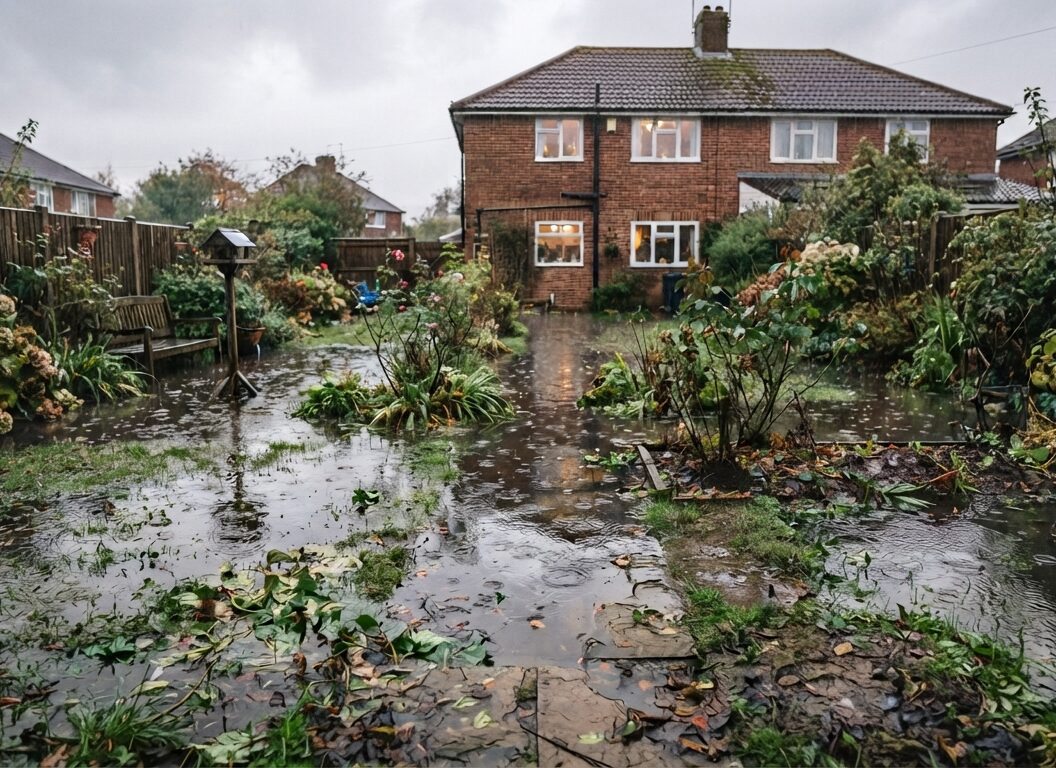
Does your garden keep flooding when it rains?
You’re not alone; poor garden drainage is a common issue that can damage plants, attract pests and make outdoor spaces unusable.
In this guide, we’ll explain how to identify the signs of poor drainage and explore practical garden drainage solutions to help manage excess water and improve your outdoor space.
Contents:
- Signs & Causes of a Waterlogged Garden
Common Signs and Causes of a Waterlogged Garden
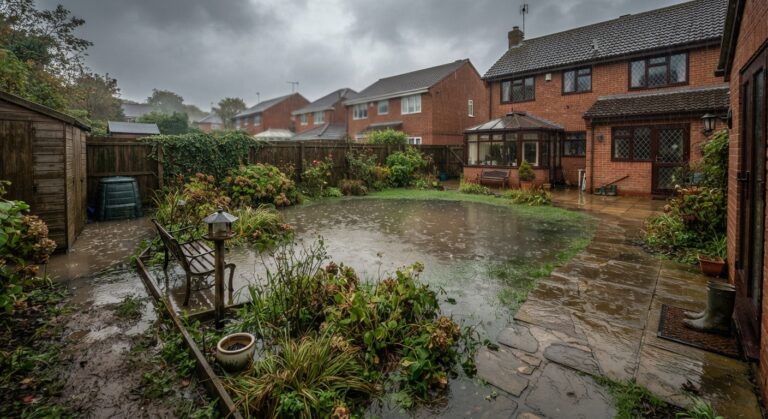 The signs of a waterlogged garden are often easy to identify. Persistent puddles after rain, squelching underfoot and excessive moss growth are clear signs that the ground isn’t draining as it should. But what’s causing the problem?
Common reasons for garden flooding and poor drainage include:
- Uneven garden surfaces – Low spots collect water, creating pools that struggle to drain.
- Compacted soil – Dense, hard-packed soil prevents water from soaking through and draining effectively.
- Clay soil composition – Naturally dense clay soil holds water on the surface instead of absorbing it.
- Blocked gutters and downpipes – Overflowing gutters can direct excess water into your garden, overwhelming its natural drainage.
While occasional puddles after heavy rain are normal, frequent flooding or water lingering for days signals a need for action. From simple adjustments to professional drainage system installations, the right solution starts with understanding your waterlogged garden’s unique challenges.
Purpose and Benefits of a Garden Drainage System
Garden drainage systems serve one primary purpose: to prevent surface water from accumulating in your garden. By absorbing excess water and releasing it safely into the surrounding soil, a proper drainage system protects both your plants and property from water damage and flooding.
If your garden keeps flooding when it rains, or you’re dealing with persistent waterlogging, understanding the benefits of a drainage system will help you decide if installation is right for you.
Here are the key benefits of installing a garden drainage system:
Prevent soil erosion
During heavy rainfall, flowing water can wash away soil particles over time. This is known as soil erosion. By installing a garden drainage system, you can prevent surface water accumulation and protect your soil from erosion.
Minimise water damage
Excess surface water can damage plant roots, and if surface water cannot drain away from your garden, there’s a chance it will seep into the foundations of your property, leading to a build-up of excess moisture. This can result in dampness and mould, which will slowly deteriorate your property’s flooring, walls and other structural aspects.
Decrease surface water build-up
In addition to causing structural damage to your garden, surface water build-up can lead to many health hazards. Not only does water pooling cause a dangerous slippery surface, but it also provides the perfect environment for bacteria and mould to grow.
Garden Drainage Solutions
There are a range of waterlogged garden solutions available, with the right option depending on your garden’s size, soil type, layout and budget. Before deciding on the best approach, it’s important to explore your options and consult your local authority regarding any relevant regulations.
Important: Most water authorities prohibit connecting surface water to foul drainage systems, as this can damage sewage treatment plants. Unauthorised connections can result in fines, so always check local regulations before installation.
Here are the main ways to improve drainage in your garden:
Simple ditches
Best for: Small gardens, sloped terrain, budget-conscious homeowners
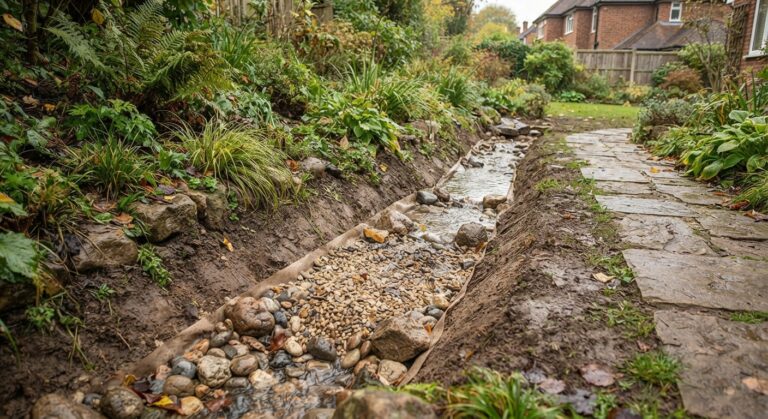
The easiest and most cost-effective garden drainage solution is a simple ditch. This involves digging a shallow channel with sloped sides, supported by large stones and smaller stones at the bottom to disperse water. Water naturally flows through the ditch and soaks into the surrounding soil.
- Pros: Inexpensive, easy to DIY, effective on slopes
- Cons: Less suitable for flat gardens, requires regular maintenance, may not handle heavy rainfall
Soakaways
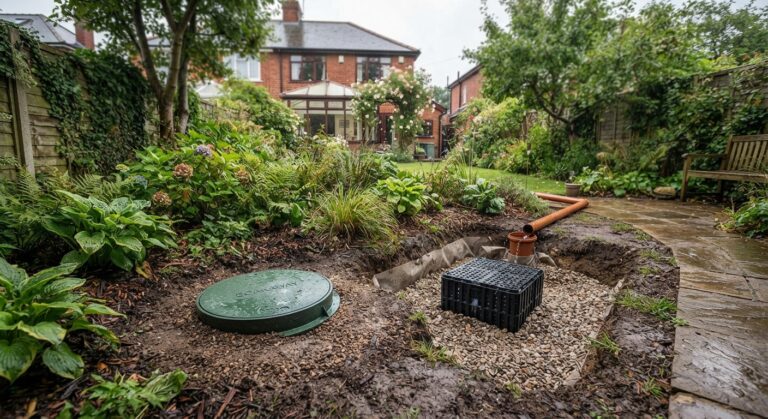 Best for: Medium-sized gardens, areas with good soil drainage, permanent solutions
A garden drainage soakaway stores surface water underground and gradually releases it into the surrounding earth. While simple soakaways can be DIY holes filled with rubble, soakaway crates (plastic construction systems) are more reliable and come in various sizes.
- Pros: Underground installation (less visible), effective long-term solution, modular sizing
- Cons: Requires excavation, less effective in clay soil, higher upfront cost
French drainage systems
Best for: Gardens of any size, collecting water from a wide area, feeding into soakaways
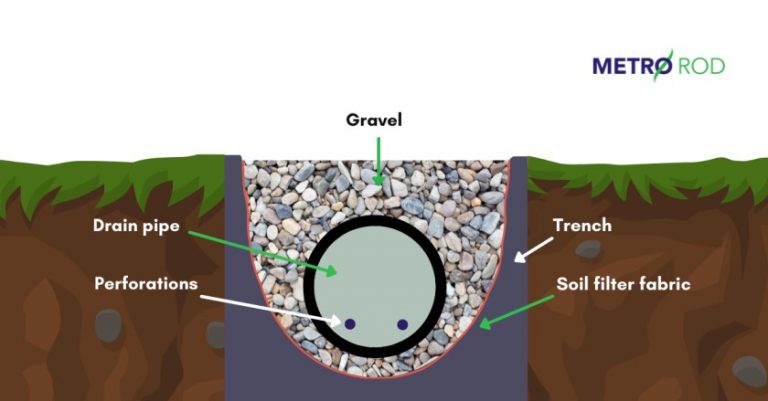
French drain systems collect surface water using small, perforated pipes laid in sloped trenches. The water travels through these pipes to a soakaway, ditch or watercourse. The sloped design allows gravity to move water naturally toward the outfall.
- Pros: Highly effective, invisible underground, works across large areas
- Cons: More complex installation, higher cost, may need professional help
Herringbone drains
Best for: Unusually shaped or severely uneven gardens, complex drainage needs
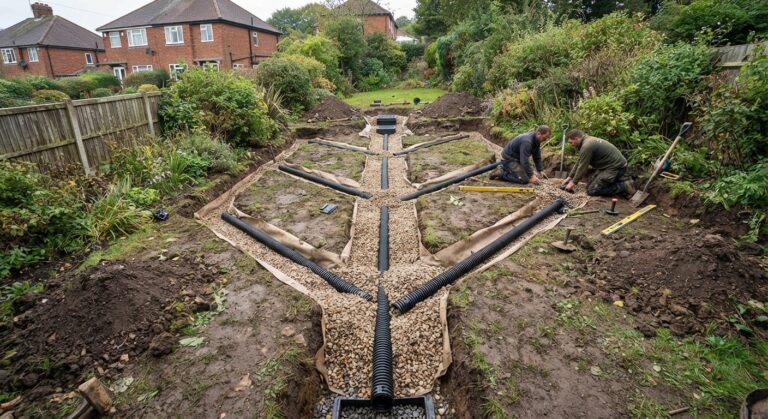
Herringbone drains work similarly to French drains but use multiple channels arranged in a herringbone pattern. This multi-channel approach makes them ideal for gardens that aren’t level or have irregular shapes.
- Pros: Handles complex terrain, is effective for irregular gardens, provides thorough coverage
- Cons: More expensive, more complex installation, typically requires professionals
How to Stop Your Garden Flooding
Installing a garden drainage system is an investment in your property. To protect that investment and avoid future waterlogging, regular maintenance and preventative measures are essential. Most prevention strategies are simple and cost-effective. Here’s how to stop garden flooding before it becomes a serious problem:
Keep your gutters and downpipes clear
Blocked gutters are one of the most common causes of garden flooding. Leaves, debris and buildup force water to overflow directly into your garden, overwhelming your drainage system. Clean gutters at least twice yearly (spring and autumn), and more frequently if you have trees nearby.
Pro tip: Install gutter guards to reduce debris accumulation and make maintenance easier.
Maintain your existing drainage system
If you already have garden drainage installed, regular inspection prevents costly problems. Check for:
- Pipe blockages or sediment buildup
- Cracks or damage to drainage channels
- Debris covering soakaways or ditches
- Signs of standing water in previously drained areas
Annual professional drain inspections and maintenance are worthwhile, especially after heavy storms or winter weather.
Improve soil structure
Compacted soil is a major drainage culprit. Improve your garden’s natural drainage by:
- Aerating your lawn annually (using a garden fork or an aeration machine)
- Adding organic matter (compost or mulch) to improve soil composition
- Avoiding heavy foot traffic on wet soil
- Considering raised beds or garden edging to direct water flow
Grade your garden properly
Uneven surfaces create water collection spots. To prevent garden flooding, ensure your garden has a slight slope away from your property and any planted areas. Even a gentle slope (1-2%) helps water flow naturally toward drainage systems or outfalls.
Choose water-wise landscaping
Strategic landscaping choices help manage drainage naturally:
- Plant water-loving species in low areas (where water naturally collects)
- Use gravel or permeable paving instead of solid surfaces
- Create rain gardens (shallow planted areas that absorb runoff)
- Avoid creating hard surfaces that direct water toward problem areas
Monitor after heavy rainfall
Keep an eye on your garden after storms. If you notice:
- New puddles forming
- Water is taking longer to drain
- Areas that didn't previously flood now show problems
…address these issues quickly before they worsen. Early intervention is cheaper than dealing with established drainage failures.
Contact a Garden Drain Specialist
Many garden drainage problems stem from surface water not draining efficiently. Contact your local Metro Rod depot today if you suspect a blocked garden drain, need expert advice on the best drainage system or require expert flood prevention services.
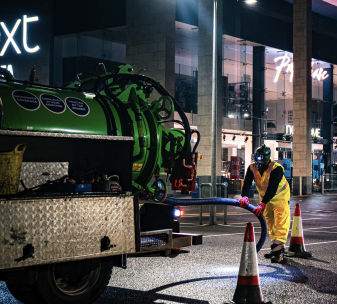
Talk to your local Metro Rod specialist
We are always happy to arrange a free site assessment and no obligation quotations for any work you might need. Alternatively, you can call our emergency hotline number on 0800 66 88 00
Get in touch Drainage Services