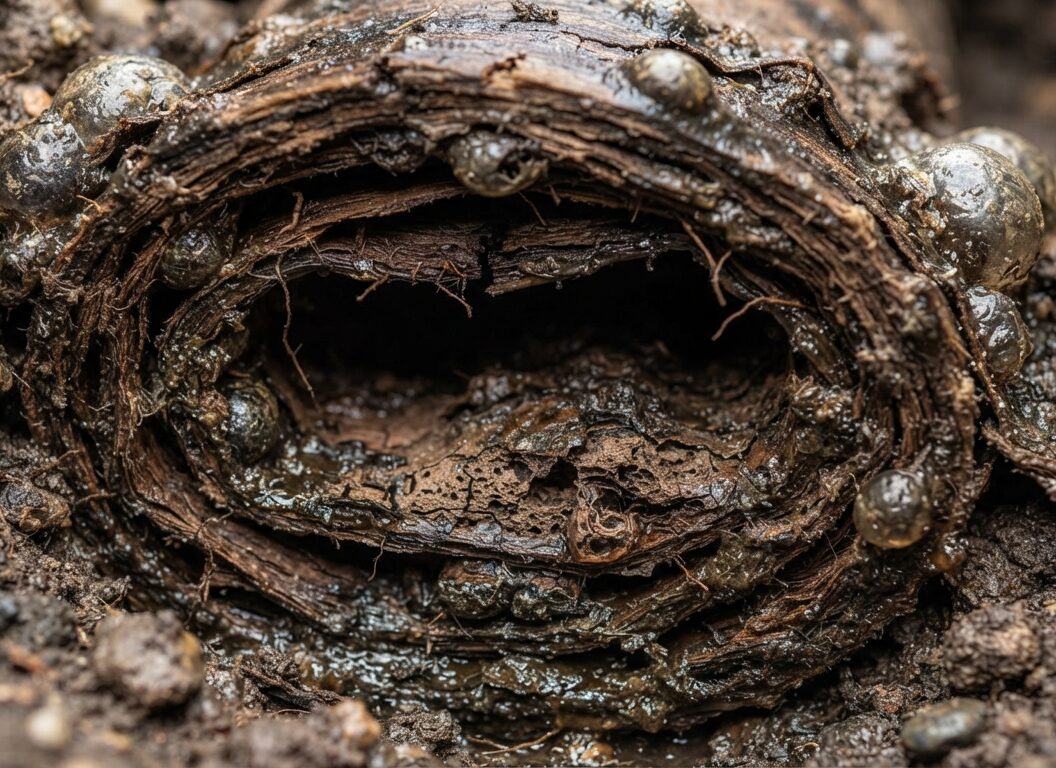
Understanding Pitch Fibre Drains and Why They Can Cause Problems
Pitch fibre drains were once considered an innovative solution for underground drainage. However, many property owners across the UK are now discovering that these ageing pipes can become a significant source of drainage problems.
If you’ve recently been told you have pitch fibre drains, or you’re experiencing recurring blockages, collapses or drainage issues, understanding the condition of your pipework is essential. Early identification can help prevent costly repairs and extend the life of your drainage system.
Pitch Fibre Drains, Contents:
- What Are Pitch Fibre Drains?
- How Do You Identify Pitch Fibre Drains?
- How Long Do Pitch Fibre Drains Last?
- Common Problems with Pitch Fibre Drains
- Pitch Fibre Drain Repair Options
- Pitch Fibre Drain Repair Cost
- Frequently Asked Questions About Pitch Fibre Drains
What Are Pitch Fibre Drains?
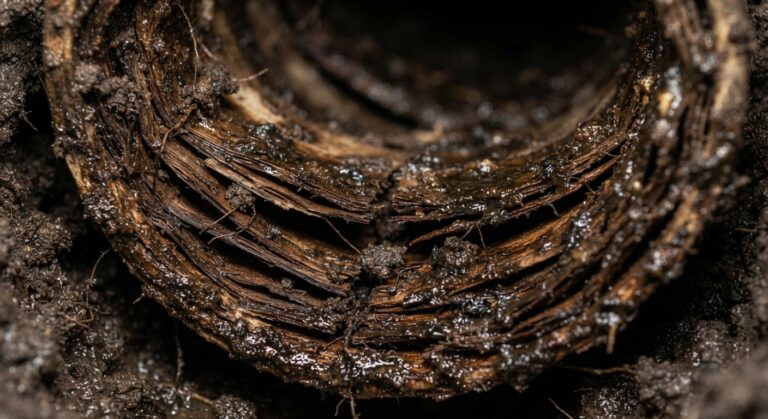 Pitch fibre drains, sometimes referred to as Orangeburg Pipes, are a type of drainage pipe manufactured from wood cellulose fibres impregnated with coal tar pitch. Some versions also contained glass fibre reinforcement and, in certain cases, asbestos to improve strength.
Developed during the 1940s, pitch fibre was introduced as a cheaper and lighter alternative to traditional clay drainage pipes. With material shortages during and after World War II, they became a popular option for new housing developments, social housing estates and Ministry of Defence (MOD) sites.
Their lightweight construction made them quick and easy to install, leading to widespread use throughout the UK until the 1970s.
Today, many of these pipes remain in service, particularly across the South and South West of England, where large volumes were installed during post-war housing expansion. Areas such as Devon, Cornwall, Somerset, Dorset, Southampton, Portsmouth, Bristol and parts of Wiltshire are known to contain significant numbers of older properties and housing estates with pitch fibre drainage systems.
Get expert insight into your drainage system with a comprehensive CCTV survey.
Why Are Pitch Fibre Drains Also Called Orangeburg Pipes?
The term Orangeburg Pipes originated in the United States, where similar pipes were manufactured in Orangeburg, New York.
Although the name is less commonly used in the UK, many property owners searching online for drainage issues may see both terms used interchangeably. Whether referred to as Orangeburg pipes or pitch fibre drains, they share the same characteristics and common structural weaknesses.
How Do You Identify Pitch Fibre Drains?
The most accurate way to identify pitch fibre drains is through a CCTV drain survey.
 During the inspection, engineers can identify characteristic signs such as:
- Coal-black pipe interiors
- Bubble formations caused by delamination
- Deformed or flattened pipe sections
- Bowing and distortion
- Evidence of historical repairs
Unlike modern plastic systems, pitch fibre drains often have long straight runs with relatively few connections or junctions, making them easy to recognise during inspection.
A CCTV drain survey also helps determine whether repair or replacement is the most appropriate solution.
Concerned about ageing pipework? Arrange a professional CCTV drain inspection.
How Long Do Pitch Fibre Drains Last?
Pitch fibre drains were originally designed with a lifespan of approximately 40 to 50 years.
As most installations occurred between the 1950s and 1970s, many systems have now exceeded their expected service life. While some remain functional, age-related deterioration is increasingly common.
Regular CCTV drain surveys are the best way to assess their condition and identify developing defects before they become major problems.
Find out whether your pitch fibre drains need repair or replacement.
Common Problems with Pitch Fibre Drains
Although revolutionary for their time, pitch fibre drains have several weaknesses that become more apparent as the pipes age.
Delamination
One of the most common issues is delamination. Over time, hot water, fats, oils and grease can soften the bitumen within the pipe walls, causing the layers of material to separate.
This often creates bubble-like defects visible during a CCTV drain survey.
Deformation and Bowing
As the pipe structure weakens, ground pressure can cause the pipe to deform. Unlike clay or modern plastic pipes, pitch fibre drains can flatten, bow or become misshapen underground.
This restricts flow capacity and increases the likelihood of recurring blockages.
Root Ingress
Weakened sections of pipe are more vulnerable to root intrusion. Tree roots can exploit defects within the pipe wall, leading to cracks, blockages and further structural damage.
Pipe Collapse
In severe cases, continued deterioration can result in complete pipe collapse, causing recurring drainage failures and potential flooding.
Experiencing recurring drain blockages? Speak to our drainage specialists today.
Pitch Fibre Drain Repair Options
If defects are identified, there are typically two main options for pitch fibre drain repair.
1. Excavation and Replacement
Where the pipe has collapsed or suffered extensive structural failure, excavation may be necessary.
This involves:
- Excavating the affected section
- Removing damaged pipework
- Installing new drainage pipes
- Reinstating the surrounding area
While highly effective, excavation can be disruptive, especially beneath driveways, roads, landscaped gardens or commercial premises.
2. No-Dig Pitch Fibre Drain Repair
For many property owners, pitch fibre drain repair can be completed without excavation using cured-in-place pipe lining (CIPP).
This trenchless technique involves inserting a resin-impregnated liner into the existing pipe, which is then inflated and cured to create a new structural pipe within the old one.
Benefits include:
- Minimal disruption
- Faster installation
- Lower reinstatement costs
- Increased structural strength
- Extended pipe lifespan
- Improved hydraulic performance
In many cases, deformed pitch fibre drains can also be re-rounded before lining takes place, helping restore flow capacity.
Looking for a long-term solution? Talk to our experts about pitch fibre drain repair.
Pitch Fibre Drain Repair Cost
One of the most common questions we receive is about the cost of pitch fibre drain repair.
The cost depends on several factors, including:
- Length of pipe requiring repair
- Severity of deterioration
- Accessibility of the drain
- Whether excavation is required
- Property location
- The repair method selected
Generally, no-dig pitch fibre drain repair using CIPP lining is often considerably more cost-effective than full excavation and replacement, particularly when pipes run beneath buildings, roads or landscaped areas.
A CCTV drain survey is usually required before an accurate quotation can be provided.
Want to understand your repair options and costs? Contact our team today.
Looking for Pitch Fibre Drain Repair Near You?
If you think your property may have pitch fibre drains, or you’re dealing with recurring blockages, slow drainage or drain damage, our local drainage specialists can help. A professional CCTV drain survey will identify the condition of your pipework and determine whether pitch fibre drain repair or replacement is required.
From no-dig drain repairs to complete drainage solutions, our experienced engineers provide fast, reliable support. Contact your local team today to arrange a survey and find the right solution for your pitch fibre drains before minor issues become costly repairs.
Frequently Asked Questions About Pitch Fibre Drains
What is pitch fibre?
Pitch fibre is a pipe material made from compressed wood cellulose fibres saturated with coal tar pitch. It was widely used in drainage systems between the 1940s and 1970s.
Are pitch fibre drains still safe?
Many pitch fibre drains remain operational today. However, because most have exceeded their intended lifespan, regular inspections are recommended to identify deterioration before failures occur.
How do I know if I have pitch fibre drains?
A CCTV drain survey is the most reliable way to identify pitch fibre drains. These pipes have a distinctive black appearance and often show signs of deformation or delamination.
Get expert insight into your drainage system with a comprehensive CCTV survey.
What causes pitch fibre drains to fail?
The most common causes are age, delamination, deformation, root intrusion, ground pressure and exposure to hot water, fats, oils and grease.
Looking for a long-term solution? Talk to our experts about pitch fibre drain repair.
Do excavated pitch fibre drains require special disposal?
In some cases, yes. Certain types of older pitch fibre pipework may contain reinforcing materials such as asbestos fibres, meaning disposal requirements can differ from those for modern plastic or clay pipes.
If excavation and replacement are required, your drainage contractor will assess the pipework and ensure any removed materials are handled and disposed of in accordance with relevant regulations.
It’s worth noting that the disposal of excavated pitch fibre drains can sometimes incur additional costs, and not all insurance policies cover these expenses. If you’re purchasing a property with pitch fibre drainage or making an insurance claim, it’s advisable to check the terms of your policy and discuss any potential implications with your insurer.
However, many pitch fibre drains can be repaired using no-dig techniques such as drain lining, which often avoids the need for excavation altogether and can significantly reduce disruption and waste.
Can pitch fibre drains be lined?
Yes. Most pitch fibre drain repair projects are completed using CIPP lining technology, allowing the pipe to be repaired without excavation.
Ask our experts whether trenchless repair is right for your property.
How much does pitch fibre drain repair cost?
The repair cost varies depending on the extent of damage, pipe length and repair method required. A CCTV survey is typically needed before an accurate quotation can be provided.
Find the most cost-effective solution for your drainage system.
Are Orangeburg Pipes the same as pitch fibre drains?
Yes. Orangeburg Pipes is another name commonly used to describe pitch fibre pipework and is often used in online property and drainage searches.

Talk to your local Metro Rod specialist
We are always happy to arrange a free site assessment and no obligation quotations for any work you might need. Alternatively, you can call our emergency hotline number on 0800 66 88 00
Get in touch Drainage Services